Rspk

Author: JohnCS

  • Hello world!

    Welcome to WordPress. This is your first post. Edit or delete it, then start writing!

  • Today in history, 103 years ago

    Today in history, 103 years ago

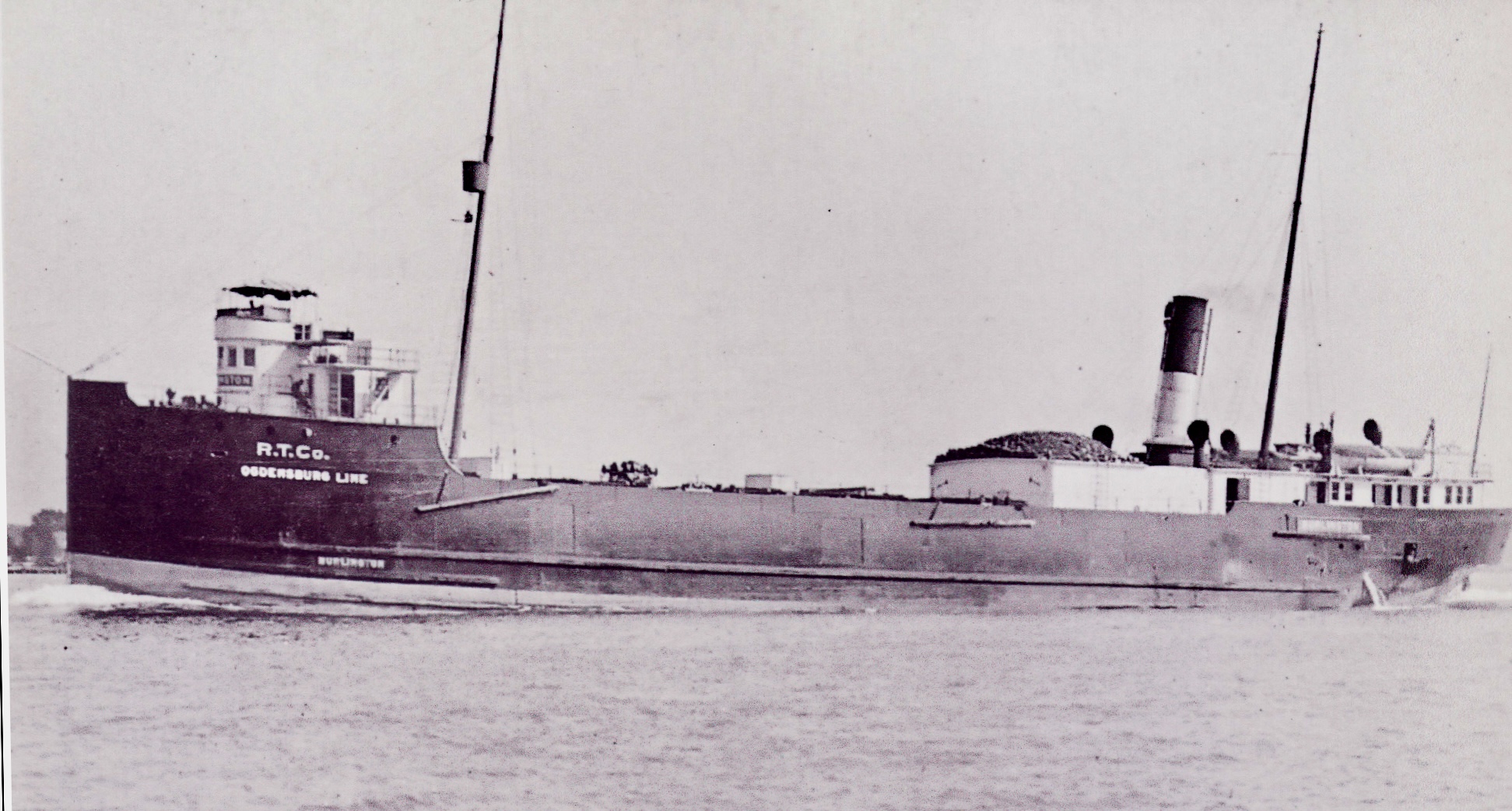
    Odgensburg Transportation Co. “Burlington”

    Rutland Boat goes aground

    Steamer Burlington Stranded in fog at Buffalo

    Buffalo, Sept. 11 – The steamer Burlington of the Rutland Transit company’s fleet grounded about 200 feet from the breakwater, near the middle gap, in the fog early yesterday morning. The Burlington was coming into port, checked down on account of the thick weather, and consequently did not strike very hard.

    A preliminary examination of the vessel made yesterday disclosed the fact that she was not making any water. Two tugs released the vessel after about half an hour’s work. The steamer left on her way to Ogdensburg yesterday afternoon. She carried a cargo of package freight, consigned from Chicago to Ogdensburg.

    Reprinted from the September 12, 1912 edition of the Ogdensburg Journal

    Found this article interesting? Would you like to learn more about the Rutland Railroad? Join the Rutland Railroad Historical Society. Membership started at only $20/year. Click here to join.
  • ALCOs For Sale

    rutland-205-960In Volume 16, Number 2 of the RRHS Newsliner, Robert W. Adams wrote an article titled “How Rutland RS1 #405 Became GMRC #405”. That article included a chart from his collection, dated July 31, 1962, showing information on the Alco RS-1’s and RS-3’s, their mileage totals from the Rutland as of that date, and their rebuild dates. The article was informative on it’s own, but this chart is even more handy if you are a modeler of the Rutland in the late 1950’s.

    For example, if you model August 1957, all of the RS-3’s you would have on your layout should be with air-cooled turbochargers, meaning the exhaust stack would be in it’s offset placement as built. If you modeled August 1958, RS-3’s 200, 204, and 208 would have the water-cooled turbocharger, meaning an exhaust stack that is centered on the long hood. If you modelled August 1959, all RS-3’s would have the water-cooled turbocharger. 207 would be bright and shiny as it was the last one overhauled, and was released from the shops in Rutland in August 1959.

    This chart is also very handy for dating photos. It’s 50-plus years now since Rutland Alco’s hauled freight, photo collections change hands and information such as dates go missing. Not all photographers are detail-oriented and recorded dates either. By looking at the exhaust stacks, it can help place photos within a year at least.

    Rutland Railway Corp.
    Unit Date
    Built
    Builders
    No.
    Diesel
    Engine HP
    Diesel Eng.
    Serial No.
    Diesel Eng.
    Type
    Date
    Installed
    Miles since
    Installed
    Unit
    Miles
    Top
    Deck
    Overhaul
    Mileage
    Since
    Overall
    200 9-13-50 78252 1600
    10851 244 10-1957 215,579 703,422
    201 5-1-51 78594 1600 10704 244 1-1959 149,693 669,766
    202 6-7-51 78880 1600 11518 244 11-1958 174,508 681,166
    203 6-8-51 78881 1600 12884 244 9-1958 175,459 697,388
    204 6-12-51 78882 1600 10615 244 8-1958 172,470 671,283 9-21-61 None
    205 8-13-52 80155 1600 10261 244 7-1959 108,320 557,759
    206 8-13-52 80156 1600 10679 244 5-1959 93,490 534,441
    207 8-13-52 80157 1600 10241 244 8-1959 116,418 566,126
    208 8-14-52 80158 1600 11022 244 7-1958 160,828 604,894
    401 10-19-51 79350 1000 6204 539 Original 313,921 313,921 2-11-59 56,557
    402 10-30-51 79572 1000 6251 539 Original 224,129 224,129
    403 11-8-51 79573 1000 6252 539 Original 301,953 301,953 2-5-60 34,354
    404 11-16-51 79574 1000 6253 539 Original 320,448 320,448 1-5-61 16,049
    405 11-21-51 79575 1000 6254 539 Original 321,717 321,717 12-2-59 35,507
    Rutland RS-3’s used Model 244-RH-1 has serrated type Engine Block
    Repairs to chassis made as running repairs, no general repairs to chassis have been made.7/31/62

    If you’d like more information like this, and are not a member of the Rutland Railroad Historical Society, why not join today. If you are member, but would like back issues, contact our Back Issues department.

  • The Rutland Transit Company in Later Life

    The Rutland Transit Company was the subsidiary of the Rutland Railroad which encompassed the railroad’s fleet of Great Lakes ships. Up until the Panama Canal Act, the Rutland worked competitively to ship cargo from Chicago to Ogdensburg via the Great Lakes, then by rail from Ogdensburg to points east.

    The Panama Canal Act killed this business, as the Rutland was forced to sell off it’s Great Lakes fleet. But what happened to the Rutland Transit Company after the Panama Canal Act. In Volume 17, Number 2 of the RRHS magazine The Newsliner, Bruce Curry authored a 12-page article answering that question.

    Would you believe that the Rutland Transit Company lasted almost as long as operations on the railroad itself? Check out the issue if you want to know more. Back issues are available here.

  • 80’s and 90’s on the Rutland

    In Volume 16, Number 2 of the RRHS’s magazine, The Newsliner, author Robert W. Adams wrote an article called “Remembering the Rutland’s 80’s and 90’s class Steam Power”.

    The 80-series steam engines were 4-6-2’s and patterned, like much of the “newer” Rutland steam roster, after New York Central designs. Engines 80-82 were classed K-1 engines and had 69″ drivers, while 83-85 were classed K-2 engines and had 73″ drivers. These steamers were used throughout the Rutland system and frequently powered the Mount Royal and Green Mountain Flyer trains, as well as time-sensitive milk trains. They were considered a favorite of engine crews.

    The 90-series steam engines were 4-8-2’s and similar in design to 4-8-2’s built for the Erie. Delivered in 1946, the four L-1 classed engines, 90-93 arrived in a striking green and yellow paint scheme. In less than two years however, they were repainted black as the green was next to impossible to keep clean. The L-1’s were the last steam engines delivered to the Rutland, and lasted less than a decade before meeting their fate in the scrapper.

    Adams’ article discusses both the 80’s and the 90’s including issues with turning them at Bellows Falls, their operations and reasons why the 90’s were purchased in the first place.


    Did you find this post informative? Would you like more information? Why not join the RRHS for a year? Membership starts at only $20, sign up today. Back issues are also available.

  • Interesting Steam Engines on the Rutland

    The Rutland’s steam roster was not known for a standardized set of motive power like bigger railroads such as the Pennsylvania Railroad. Early into the “modern” Rutland era (Post 1900), many oddballs existed on the roster.

    In Volume 16, Number 3, of the RRHS magazine, The Newsliner, author Robert K. Adams wrote of engines such as Numbers 10, 11 and 12, who were refugees from the Ogdensburg & Lake Champlain line. Built in 1897 and absorbed into the Rutland with that lines take over of the O&LC in 1899, these products of Schenectady, New York were known as “Little Hogs”. They were scrapped in 1934, but the tenders from these engines lived on, one of them until 1975.

    Engine #28 is one of the more “well-known” locomotives on the roster. Built in 1913 in Schenectady, New York, #28 was involved in a horrific head-on collision which saw the engine turn end-for-end in a crash north of Bellows Falls, Vermont. The cab was nearly severed off and the tender was detached and landed upside down. The locomotive was rebuilt and overhauled. The same locomotive was semi-streamlined in 1939 and used as the marketing ploy to announce “The Whippet” marketing scheme. The locomotive was a mechanical basket case for crews, which felt that it was “not quite right” after the accident rebuilding. None-the-less it remained in service until 1951, when it was sold for scrap to help finance the down-payments for dieselization.


    Did you find this post informative? Would you like more information? Why not join the RRHS for a year? Membership starts at only $20, sign up today. Back issues are also available.

  • The Rutland’s Uncertain Future

    Many things have been written over the years in the RRHS magazine, The Newsliner, about the Rutland’s fortunes in the late 1950’s and early 1960’s. The end-game of the Rutland was settled by the struggle between the operating unions and management, but there were other factors at work and this was known to some in management in the years prior to the end of the Rutland.

    Newsliner Editor, Bruce Curry, wrote about one of these uncertainties in Volume 19, Number 4 of The Newsliner, an article entitled “Maine Central/Canadian Pacific Deal would have wounded the Rutland”. In it, Curry writes about the prospect that the CPR and MEC may have merged. This was something that had been proposed and discussed between the two railroads in November 1958. Had such a transaction occurred, it would have robbed the Rutland of considerable overhead traffic via the Norwood-Alburgh routing and connections to the MEC via the St. Johnsbury and Lamoille County and Central Vermont railways.

    In a prior issue of The Newsliner (Volume 16, Number 4) Curry wrote an article called “The Rutland in 1959 – For Sale” which talks of efforts by Rutland President William Ginsburg to sell the Rutland to the New York Central and John Barringer III’s assessment of such a purchase. Barringer’s analysis to NYCRR’s Chair, Alfred Perlman was to not persue such a combination. In the end, what Barringer wrote was dead-on correct to what ailed the Rutland and led to it’s ultimate demise.

    Both issues (still available to order as a back issue) sift much of the ashes of the “what-if’s” of the Rutland.


    Did you find this post informative? Would you like more information? Why not join the RRHS for a year? Membership starts at only $20, sign up today. Back issues are also available.

  • Rocket Era Rutland?

    Warren Dodgson wrote a piece titled “Gone Ballistic” in Volume 7, Number 4 of the RRHS magazine, “The Newsliner”. The article goes into much detail about the Cold War era ballistic missile(ICBM) sites that dotted along the US/Canada Border in Northern New York and Vermont. All of the sites in this area were part of the Plattsburgh Air Force Base in nearby Plattsburgh, New York (D&H country).

    Sites were located at Swanton(VT), Alburgh(VT), Champlain(NY), Moores(NY) and Ellenburgh(NY). Some of the materials for the construction of the bases were shipped on the Rutland to the stations closest to the site. Some parts of the Atlas ICBM rockets were shipped via the Rutland as well, but no mention is made in the article if actual Nuclear material was shipped by rail.

    This Cold War relics are no longer in service, lasting only until the mid-1960’s and their disposition are unknown.


    Did you find this post informative? Would you like more information? Why not join the RRHS for a year? Membership starts at only $20, sign up today. Back issues are also available.

  • How much did it cost to dieselize the Rutland?

    From Volume 17, Number 1 of the Rutland Railroad Historical Society’s publication, “The Newsliner” via contributor Steve Mumley:

    #500 – GE 70 Ton Locomotive. Purchase Price, $74,895. Down payment, $14,895. $60,000 financed with Killington Bank and Trust Co.
    #400-405 – Alco RS-1 – Purchase price each, $114,283. Total price, $685,698. Down payment, $367,000. Balance financed with Hanover Bank, New York City.

    #200-204 – Alco RS-3 – Purchase price each, $147,589. Total Price $737,948. Down payment, $11,135. Balance financed with Chase National Bank.

    #205-208 – Alco RS-3 – Purchase price each, $155,830. Total price, $623,320. Down payment, $207,760. Balance financed with First National Bank of Boston.

    So the total cost to purchase a sixteen unit locomotive fleet in 1951-52, $2,121,861.


    Did you find this post informative? Would you like more information? Why not join the RRHS for a year? Membership starts at only $20, sign up today. Back issues are also available.